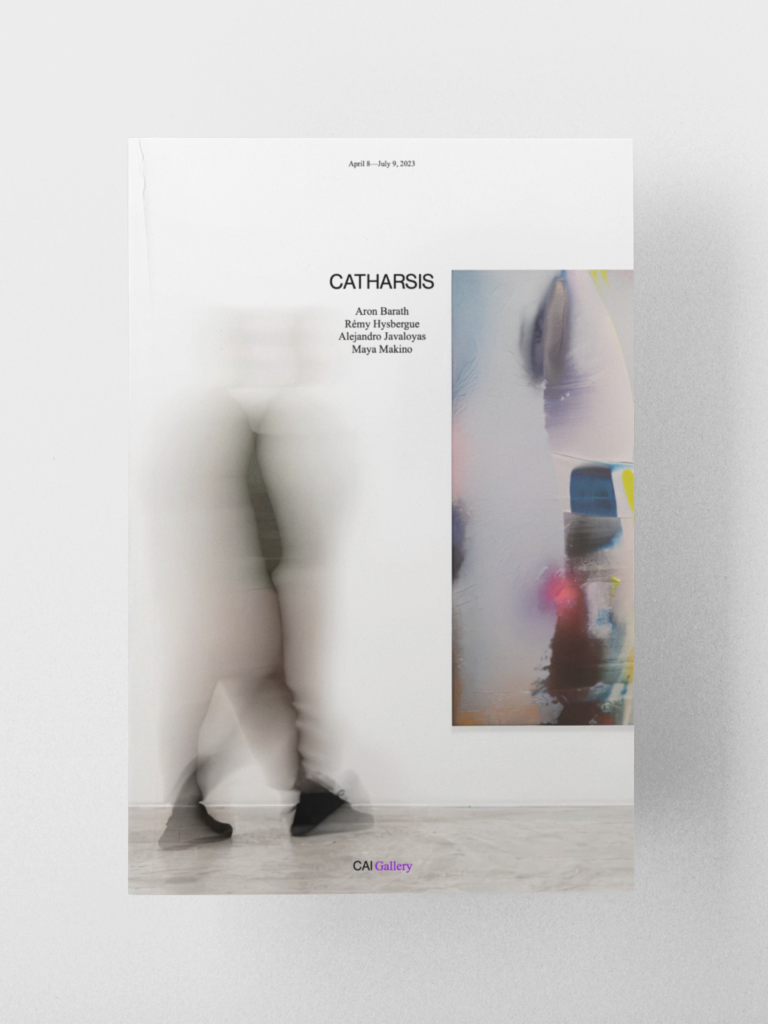
Catharsis

April 8—July 9, 2023

Viewing room

CAI Gallery is pleased to present Catharsis, a group exhibition showcasing a selection of seventeen abstract paintings by Aron Barath, Rémy Hysbergue, Alejandro Javaloyas, and Maya Makino. Catharsis is the process of releasing, and thereby providing relief from, strong or repressed emotions. The term originated in Ancient Greece, and is most commonly used today to refer to an act or process of purification of thoughts and emotions. One can find catharsis in dramaturgy—where an intentional tension is resolved resulting in a feeling of joy; in psychology—where a buried trauma is expressed and brought to consciousness, resulting in an emotional release improving our mental health; and in thise, also in painting.

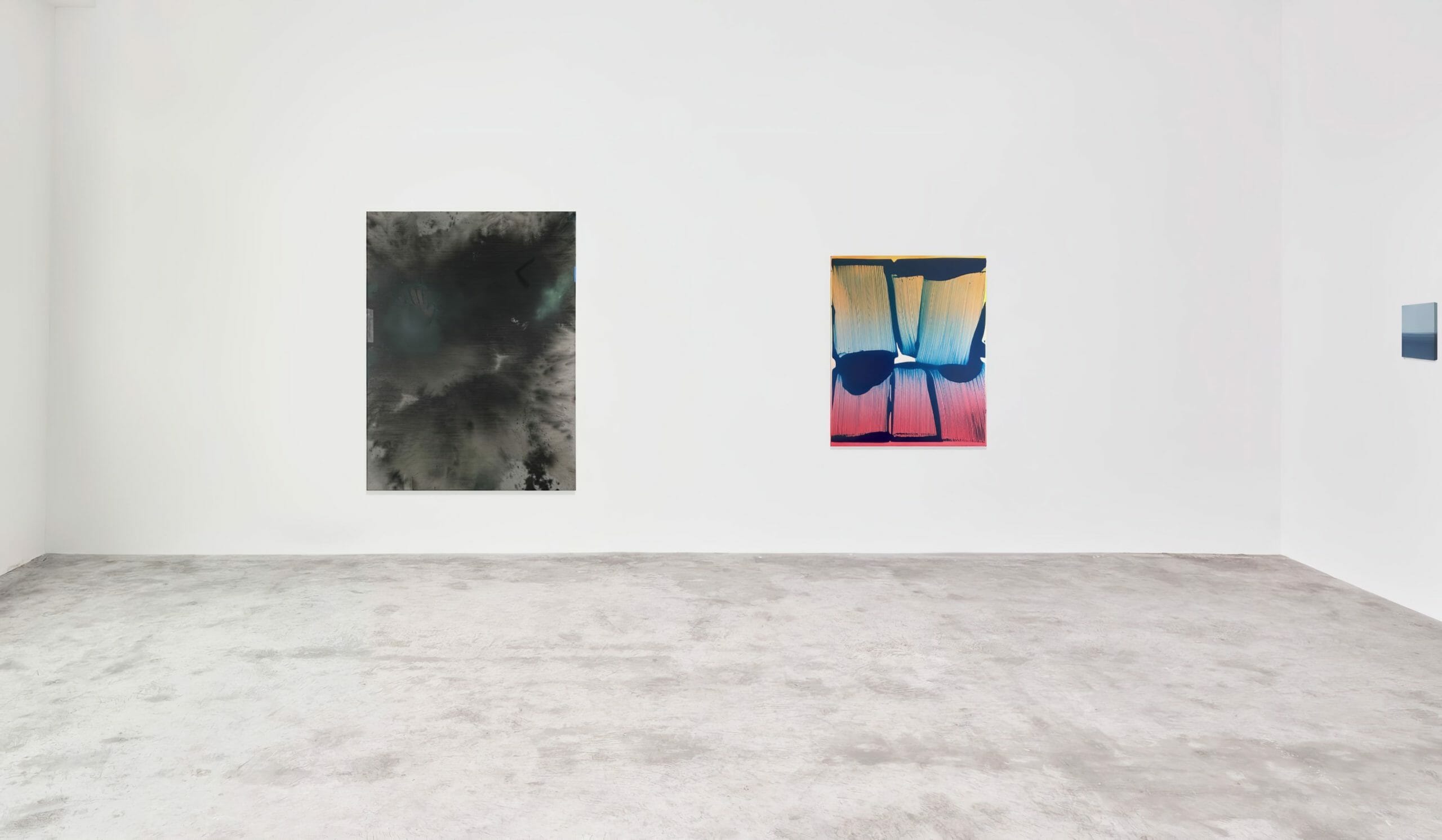
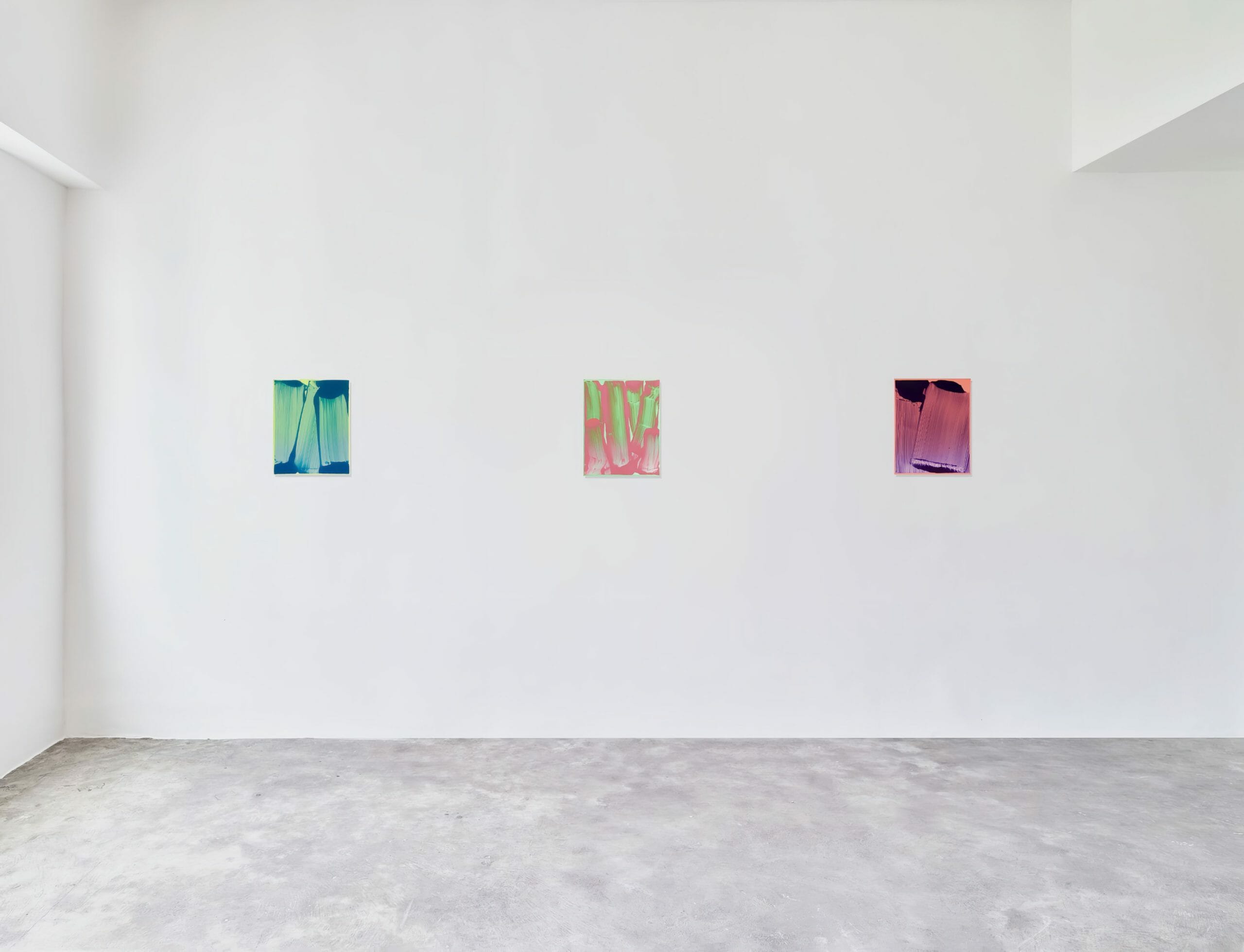
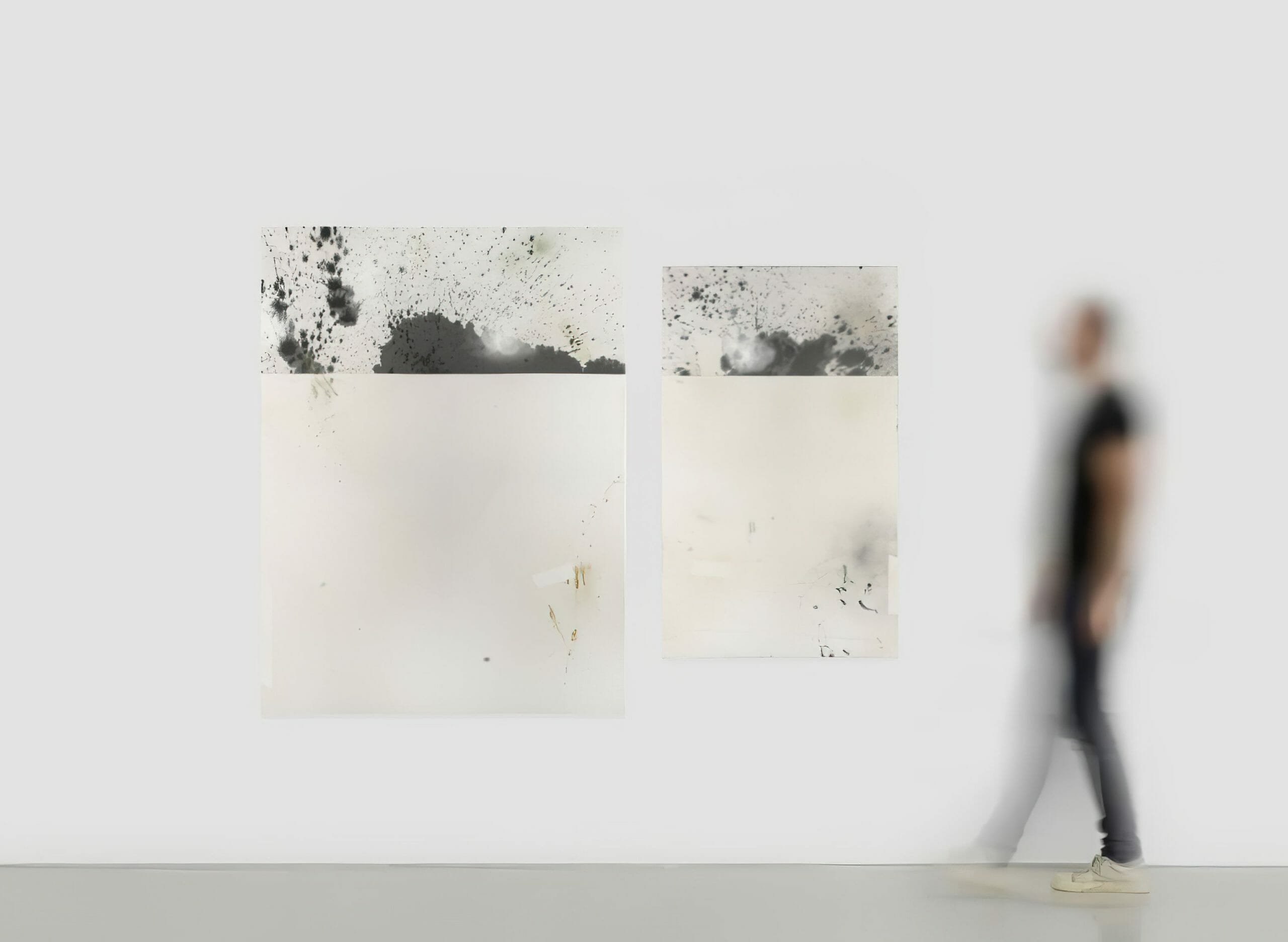
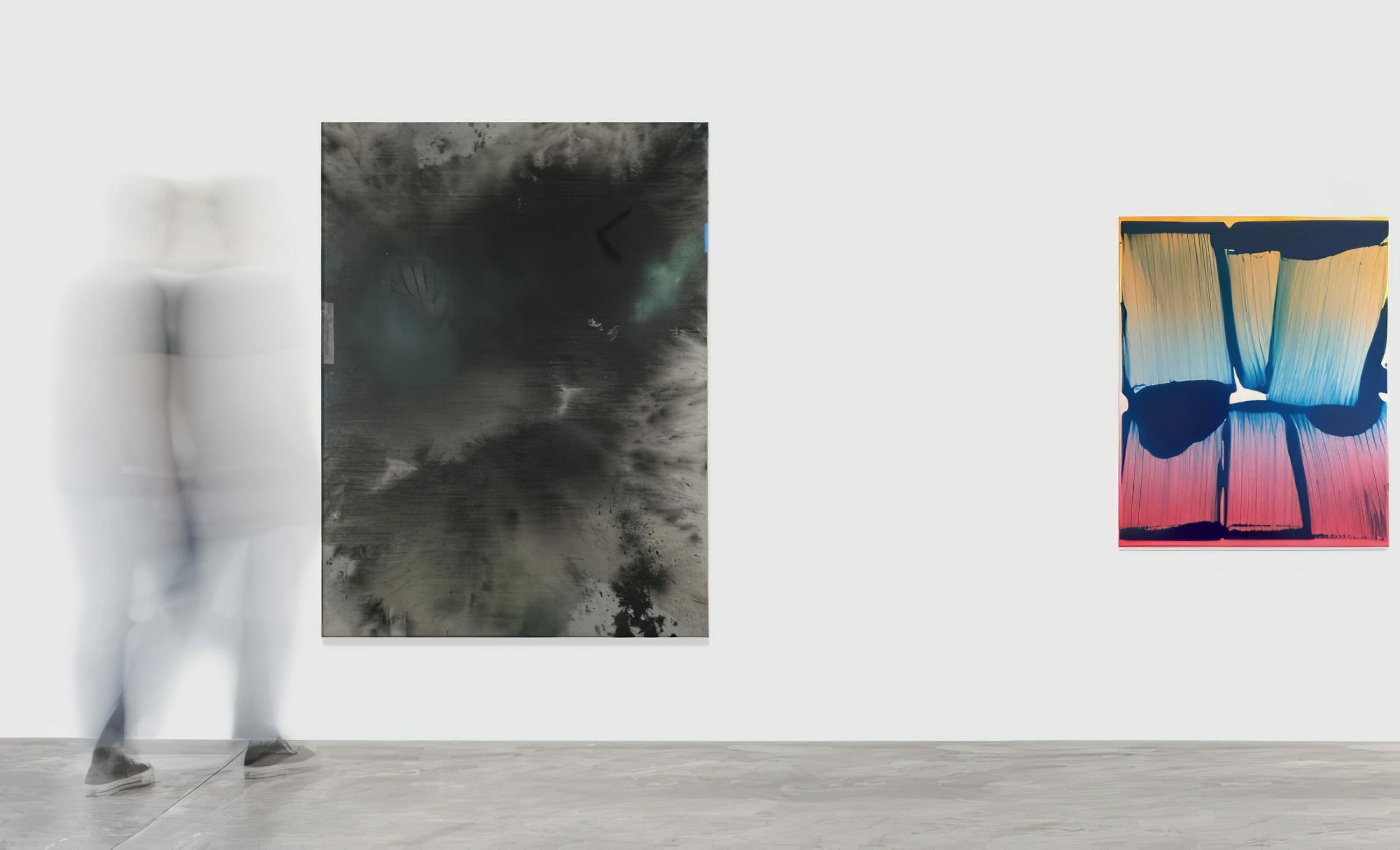
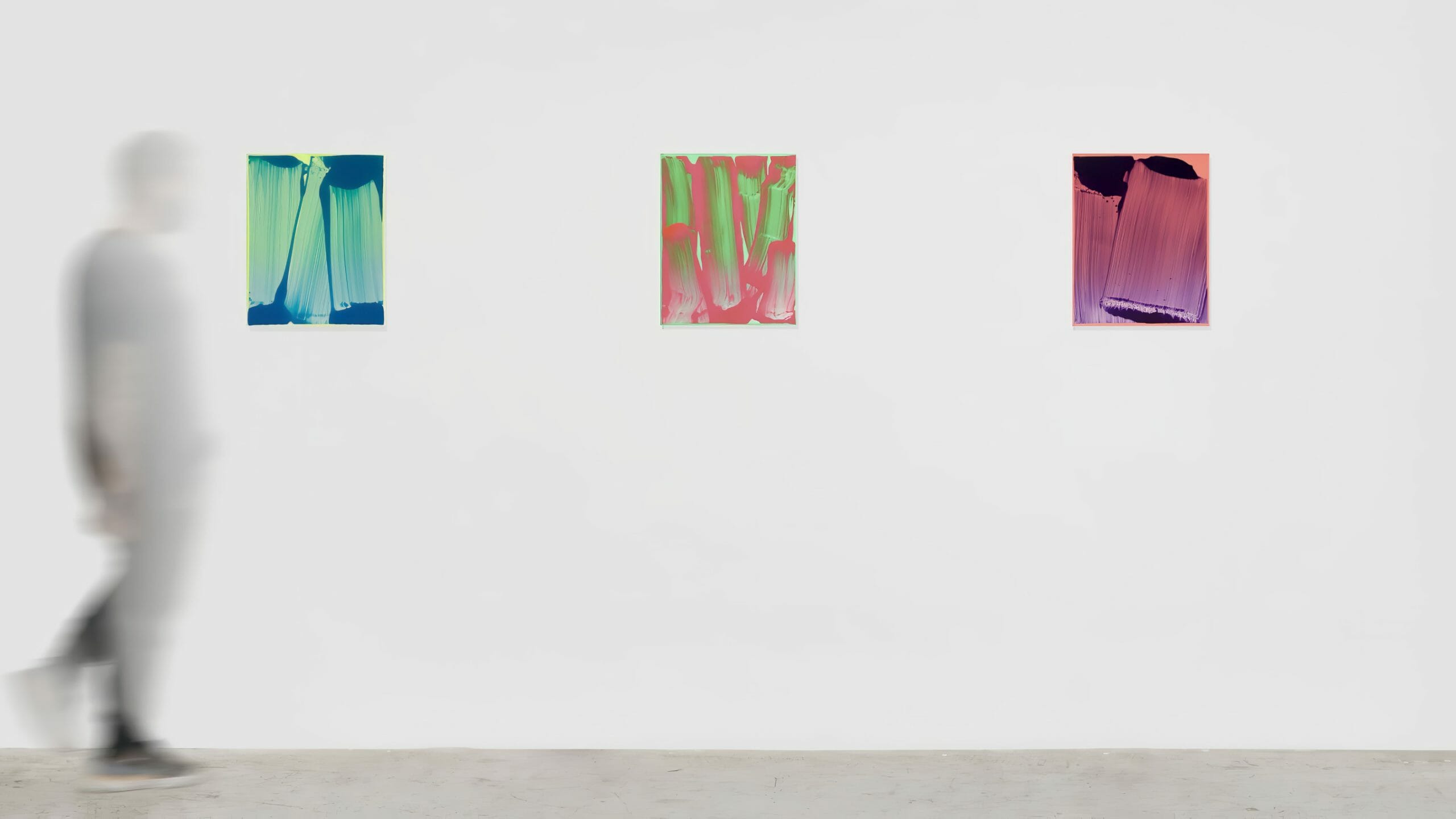
The exhibition consists of four recent pictures—produced in 2023—by Aron Barath (born in 1980 in Novi Sad, former Yugoslavia, resides and works in Budapest, Hungary), who is best known for his abstract acrylic paintings as a chromatic experience, marked by color and the seductive qualities of paint as a substance. The Hungarian painter follows a strict methodology in his creative process, creating a technical frame in which he can set himself free. The layered build up and the selected colors are reasoned. The color dictates the gesture of the artist, freeing itself from contemporary visual culture or communicational trends. What is left is pure, genuine, and truthful—light, substance, and color. His creative process is marked by a burst of energy, carried by the substance of paint and the intensity of color, capturing this energy and transmitting it to the viewer. Balancing between a structured methodology when it comes to layering the paint and the visible spontaneity of his gestures, the artist communicates his thoughts on feelings without compromise. For instance, in his smaller works such as the Untitled pieces in room three measuring 50 x 40 centimeters—or 20 x 16 inches—the artist opts to use two colors, most often opposing each other on the color wheel, remotely or entirely. The first color is used for the flat background. The second, to create an expressive, gestural foreground, juxtaposing two contrasting colors in two contrasting manners. Flat versus textured, calculated versus expressive, color one versus color two. Where the foreground is transparent or absent, the background color is dominant. Where the foreground is thick or impasto, the foreground color is dominant. However, due to their (almost) diametrical relation on the color wheel, where the opacity versus transparency is equal, the colors are almost canceled, resulting in a grey or white obtained using the most vibrant and often fluorescent colors—a metaphor found in color theory for two colliding worlds with an almost divine outcome. For his larger compositions, such as the Untitled piece in room two, measuring 110 x 90 centimeters—or 43 x 35 inches—the artist implements a trio of colors. In this archetypical structure, the selected colors are triametrically opposed, in balance and in contrast on the color wheel. The background is a vertical gradient of two colors, painted flat, or with a sprayed grain creating a vibrant transition, followed by his characteristic gestural foreground—a pure and painterly allegory for the subtle juxtaposition of controlled Apollonian, and exuberant Dionysian forces.

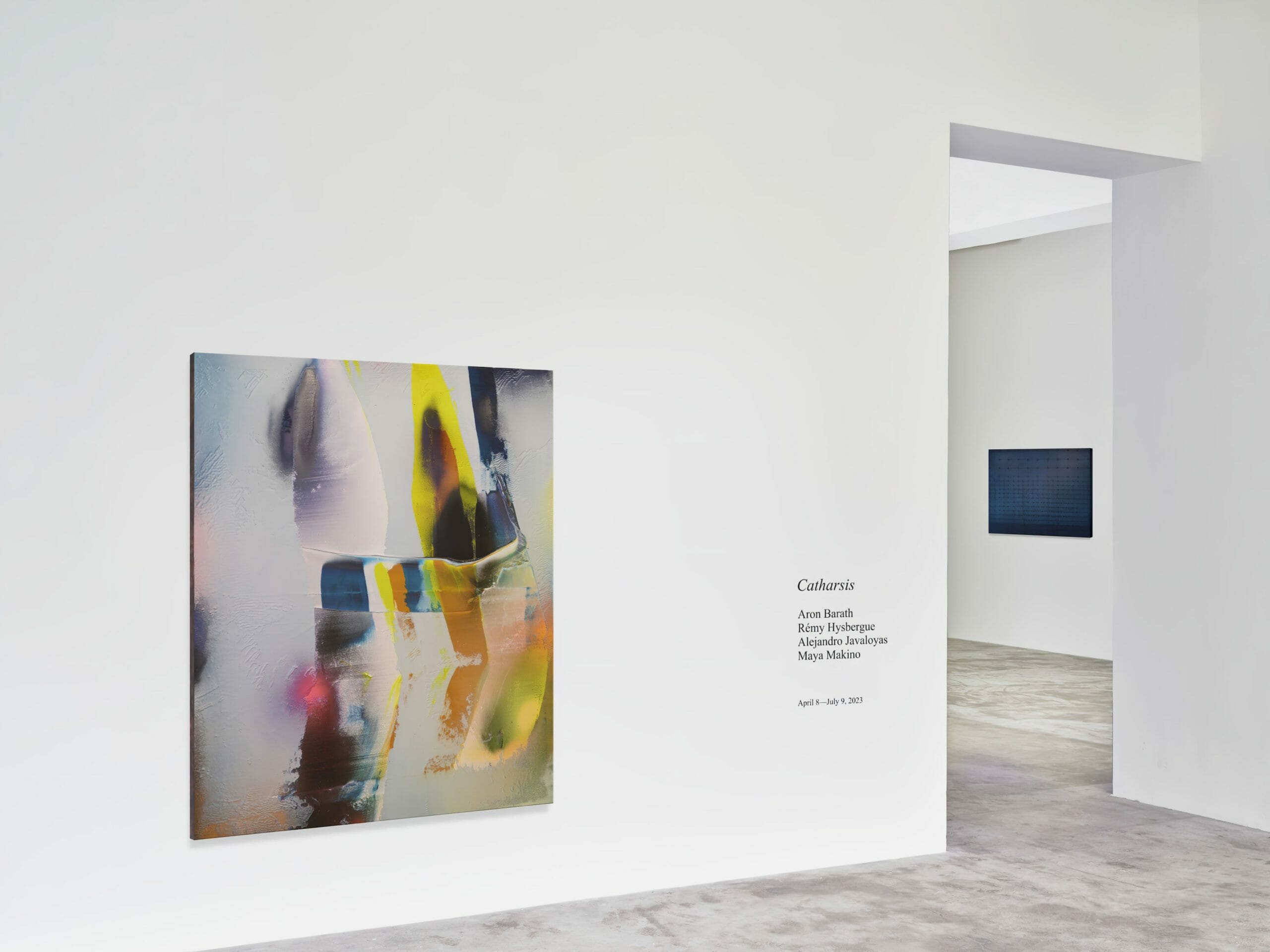
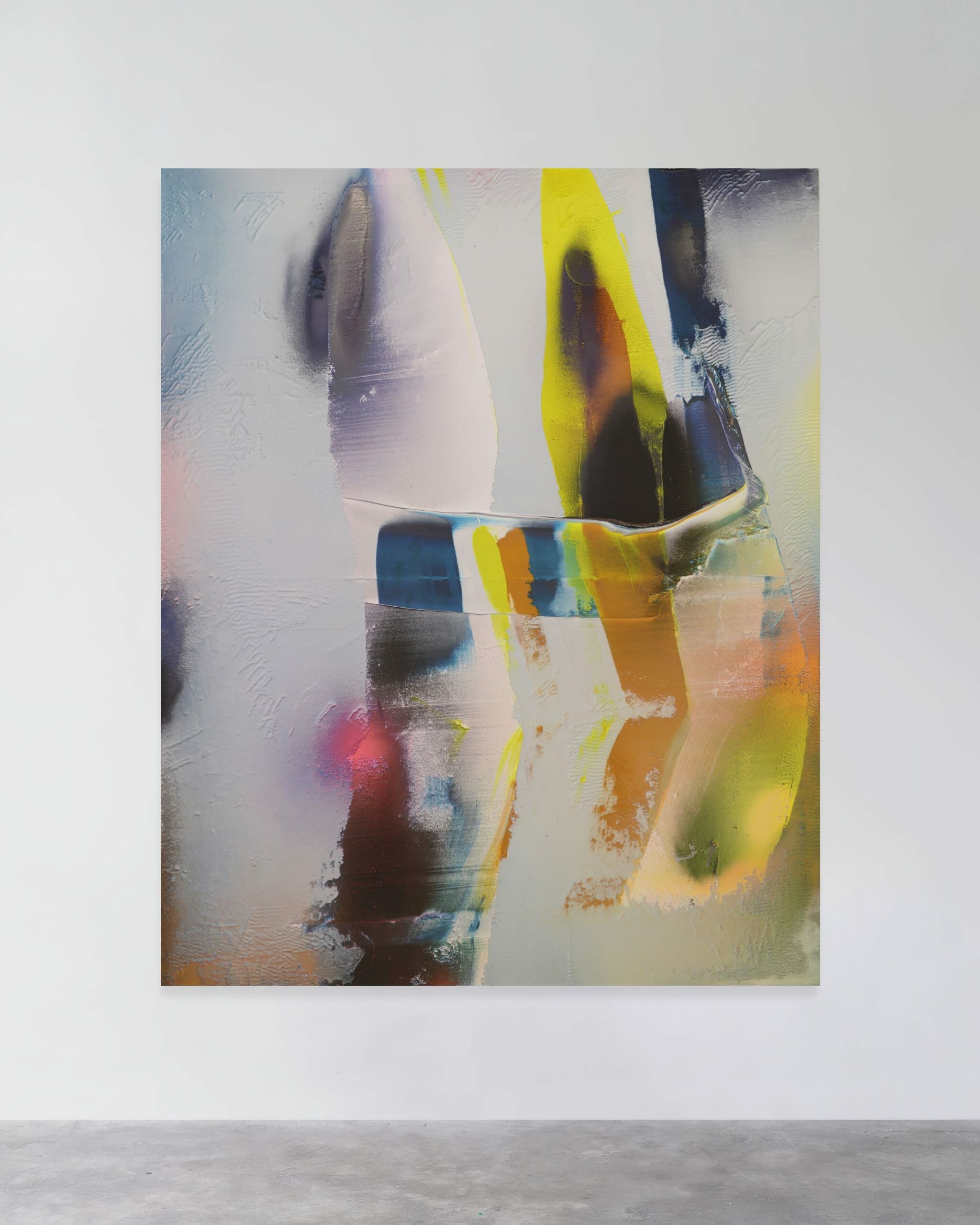
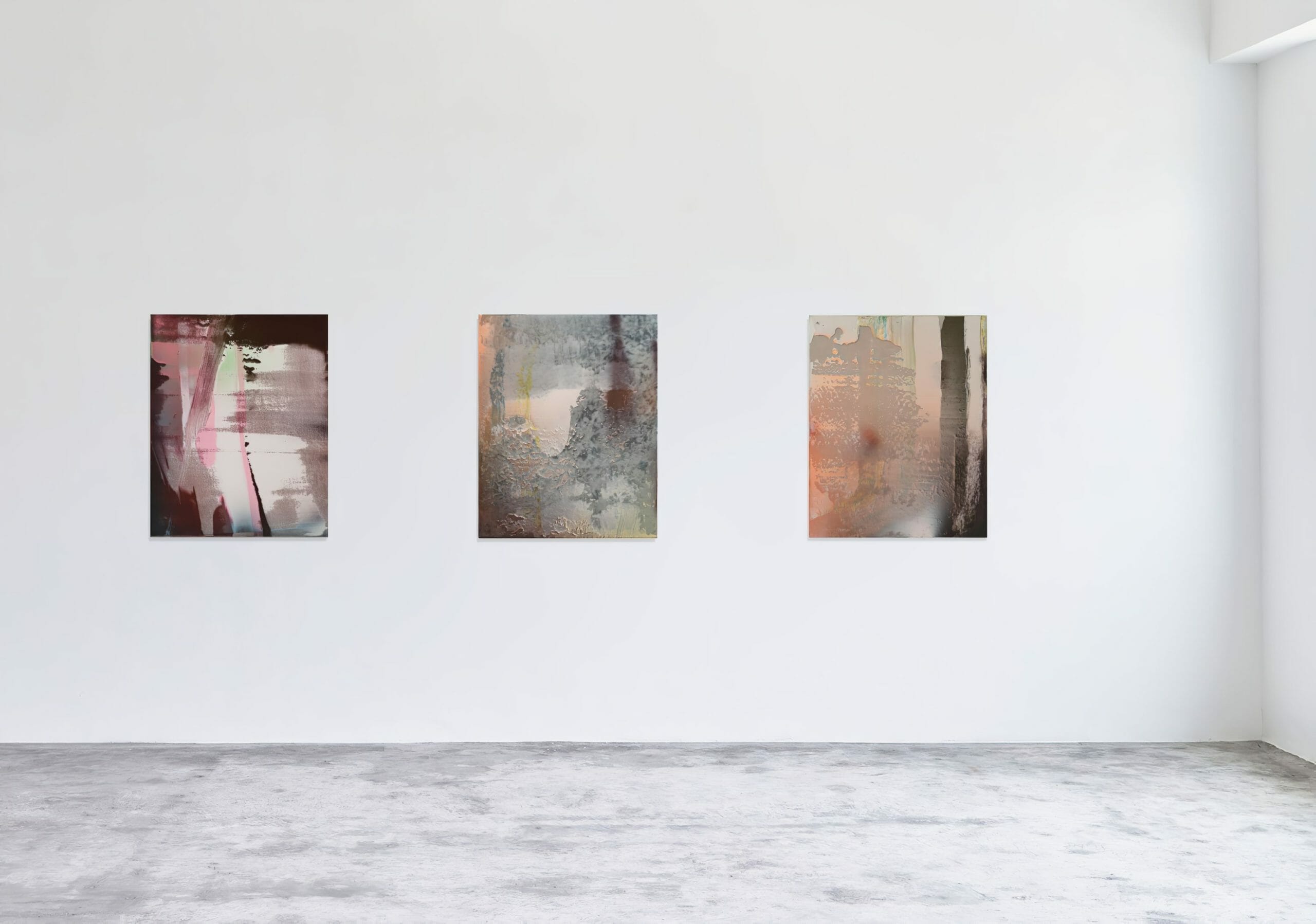
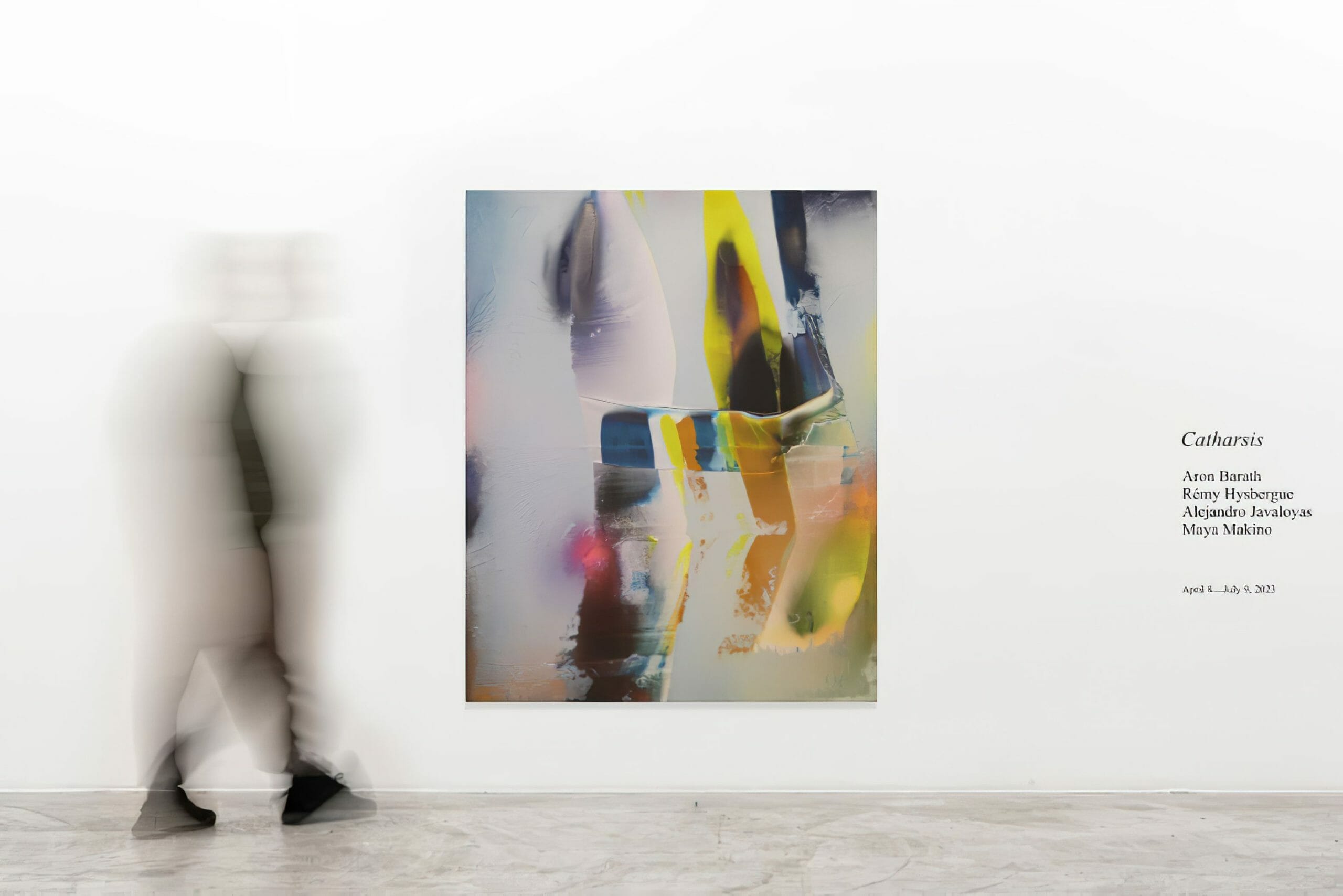
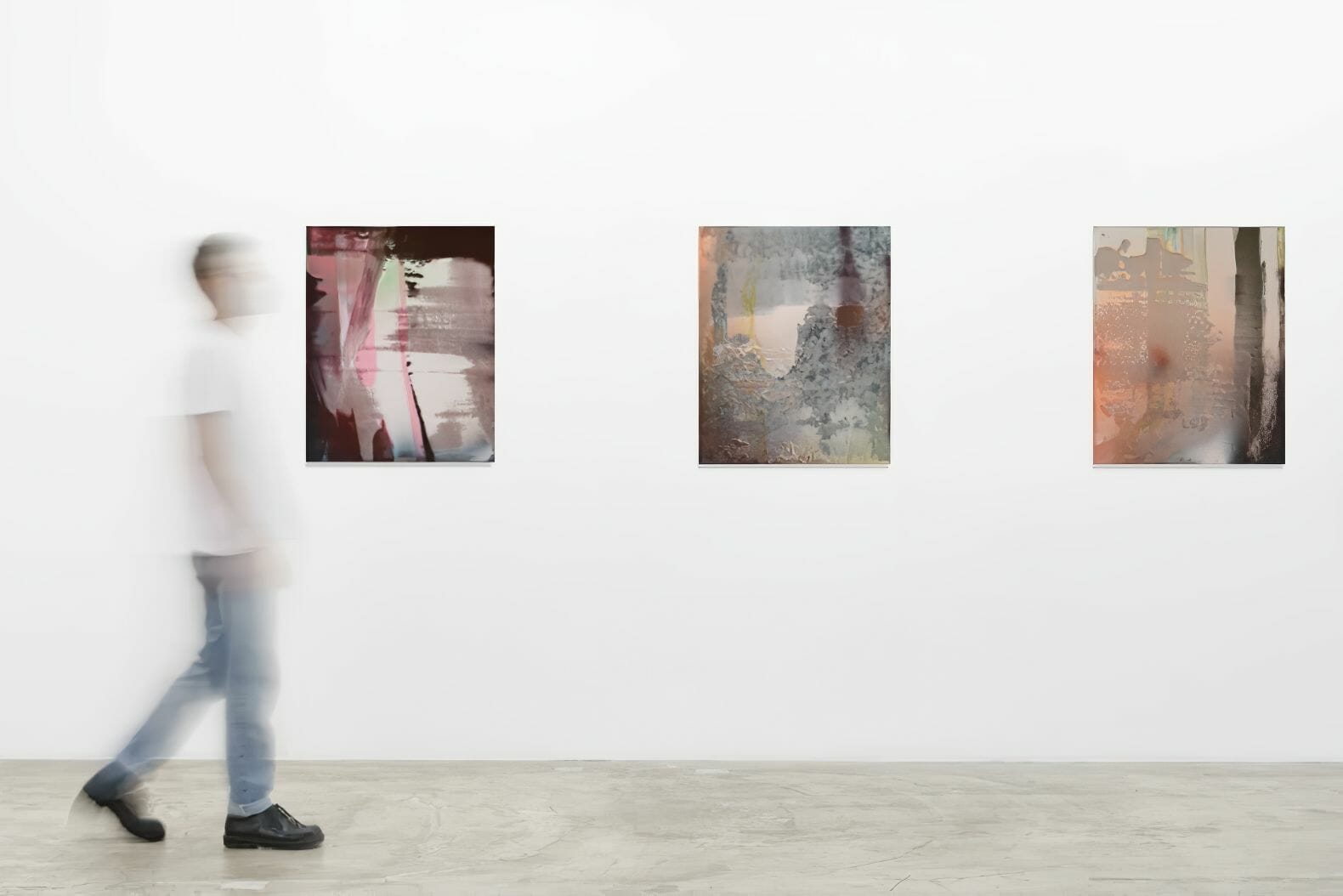
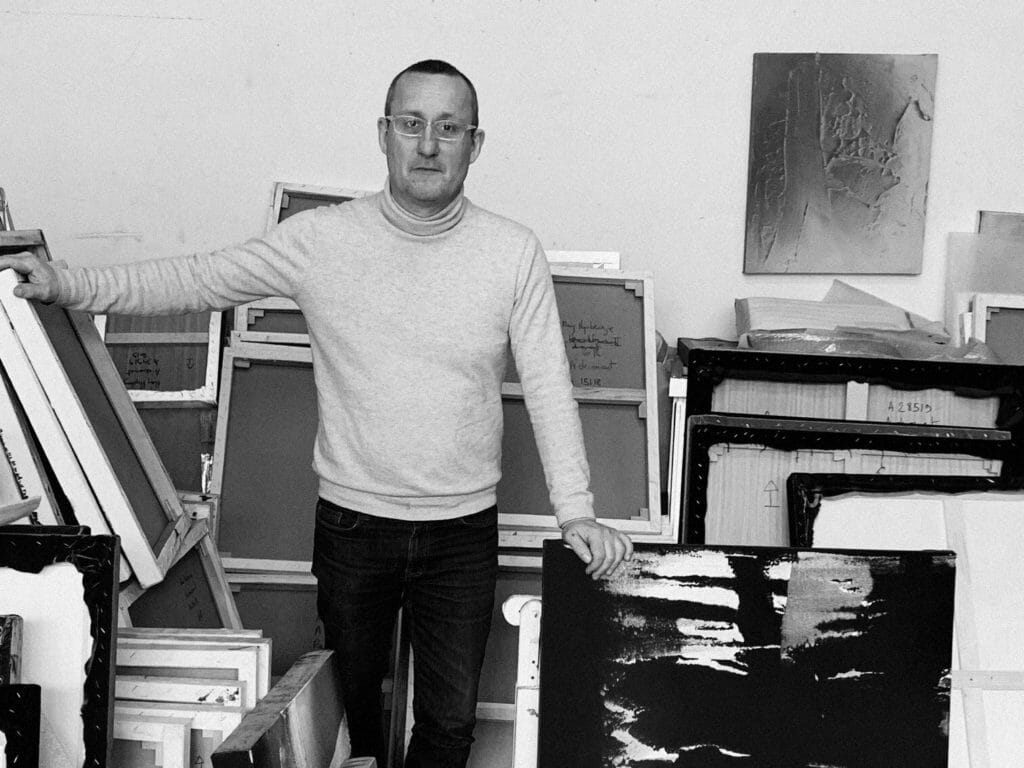
Next, we have four pictures by Rémy Hysbergue (born in 1967 in Valenciennes, France, resides and works in Paris, France). Hysbergue is a French contemporary painter pushing the boundaries of abstraction and the possibilities of unconventional surfaces. Working with acrylic painting on velvet, often mounted on panel, the support becomes as important as the paint itself, creating a unique and revisited symbiosis between the surface and the medium. The artist’s series-based practice questions 20th century abstraction, examining the formal aspects of painting in a post-abstract era. In Hysbergue’s oeuvre, matter, space, and light are essential. The French artist can shift from painting monochromes to complex and expressive compositions with an almost explosive and energetic aura. From applying thick impastos, to slick brushstrokes—varied in width—to airbrushing techniques, Hysbergue creates an interplay between the texture of paint and the illusionistic impression of relief, depth, and space within an abstract picture. As a result, he achieves new dimensions of freedom, luminosity, and materiality, due to his nimbleness and expertise when it comes to applying acrylic paint on his characteristic velvet surfaces. We open the show with his eye-catching tableau titled A 59923 (2023), measuring 162 x 130 centimeters—or 65 x 52 inches. Large planes of white communicate various textures and subtleties, culminating in a thick impasto at the center of the picture, accompanied by bright yellow and orange, and a deep blue with a dot of pink at its left. The velvet surface integrates with the materiality of the paint, resulting in a strong physical presence welcoming the viewer. In room three, the triptych of Aron Barath is mirrored with three pieces by Rémy Hysbergue, produced in 2022, measuring 81 x 65 centimeters—or 32 x 26 inches. The trio has warm presence, shifting from red to orange with contrasting browns and blues. The velvet surface seems to act differently, as does the paint, depending on how to light falls onto the tableau, offering new perspectives with the arrival of new light.

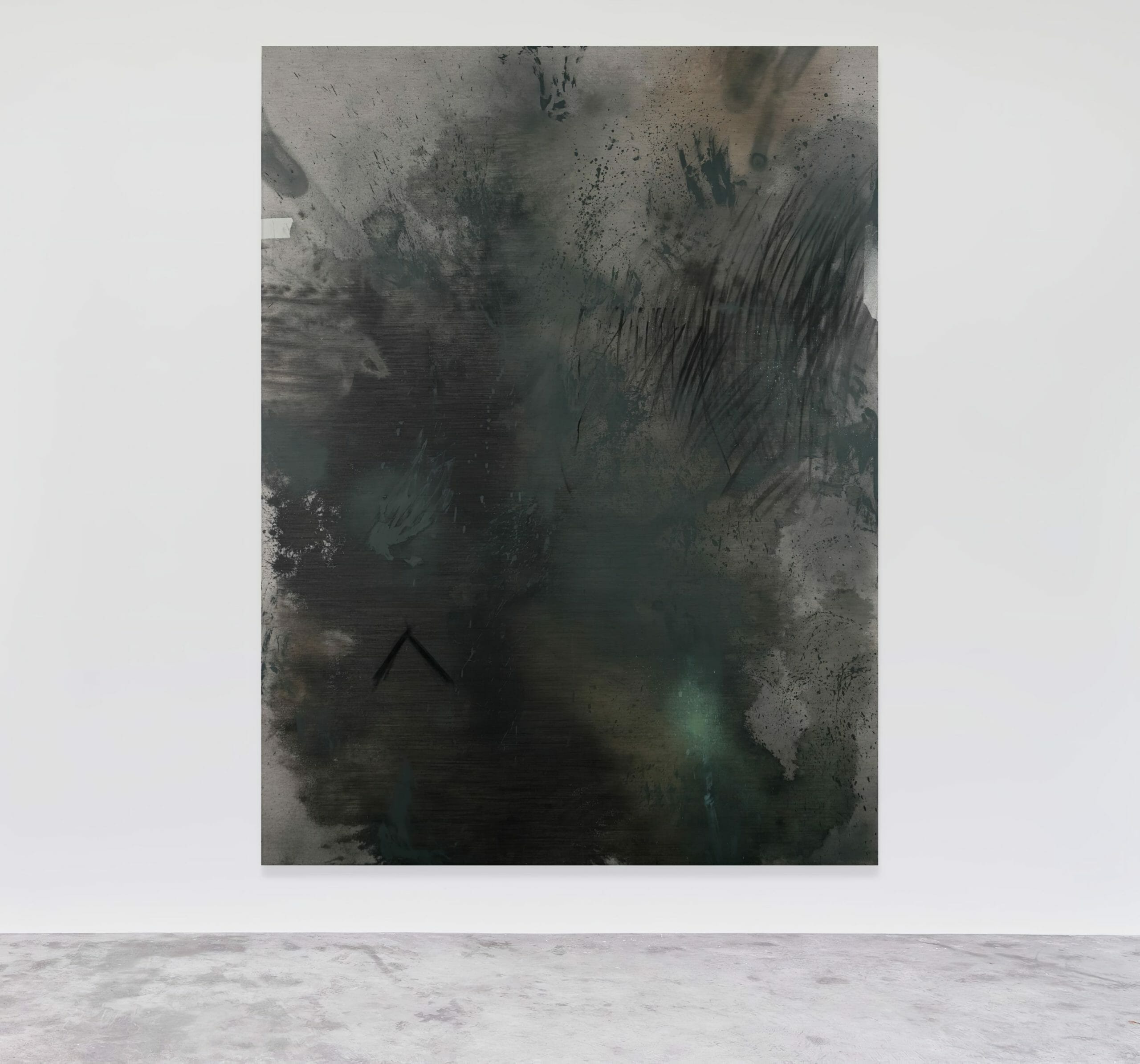
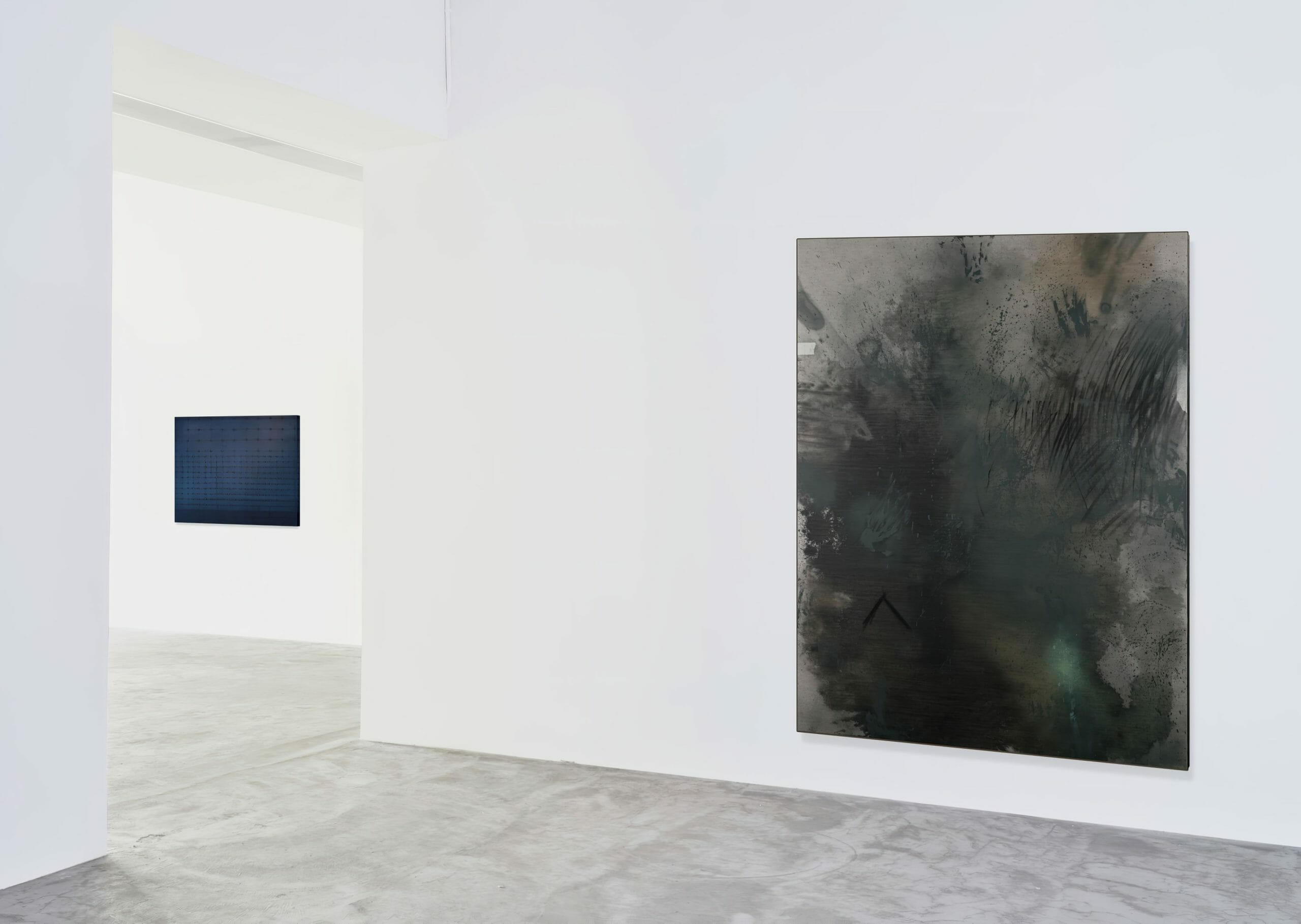
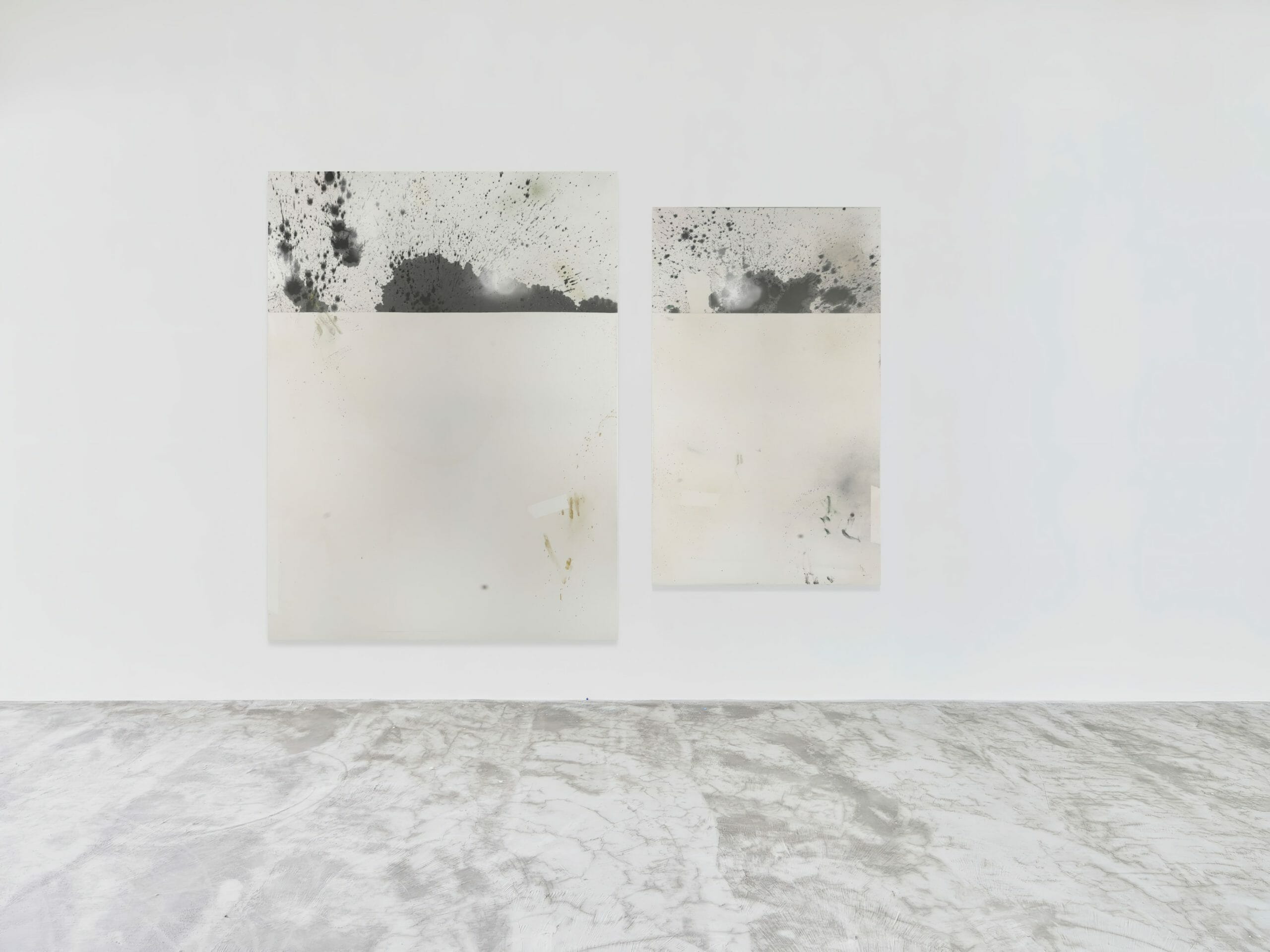
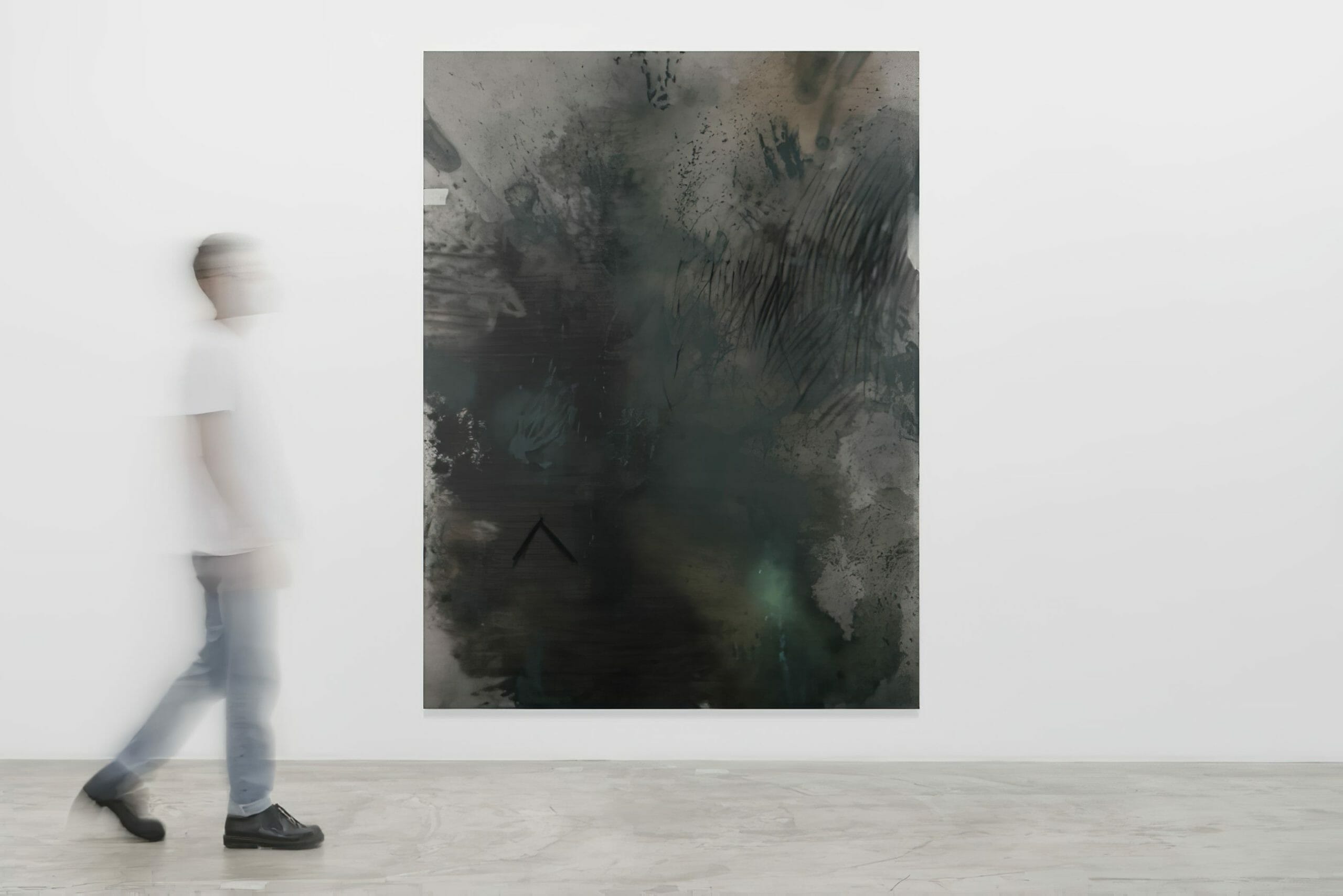
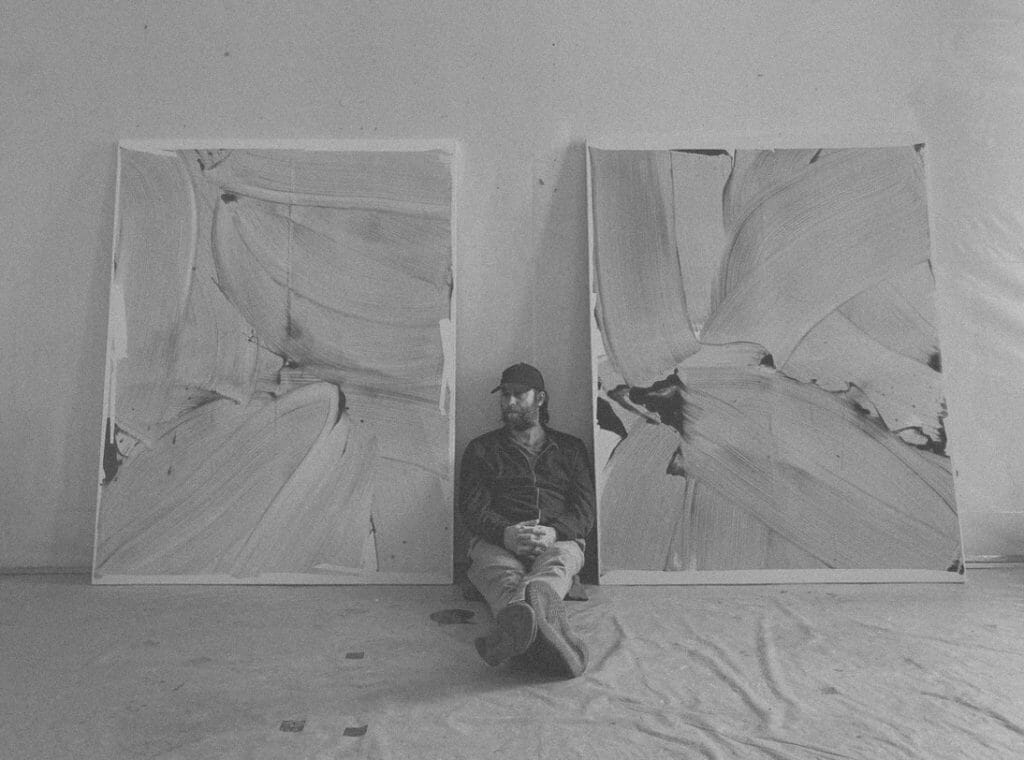
Also in the first room and welcoming the viewer, we have Alejandro Javaloyas (born in 1987 in Mallorca, Spain, resides and works in Toulouse, France), who showcases four of his abstract paintings. In fact, Javaloyas is a multidisciplinary artist working in painting, drawing, photography, video, installation, and digital art, exploring post-abstraction, ultra-photography, and the tension between freedom and disproportionate control. Javaloyas was diagnosed with giftedness and OCD when he was a child, resulting in a natural inclination towards obsession, perfection, and excessive control. However, in his artistic practice, he encounters a form of escapism, in which a transformative journey occurs between control and freedom, accompanied by notions of the loss of self-control, emotional release, and transcending experiences. The ongoing quest to experience freedom methodologically results in artistic strategies he refers to as “strategic mechanisms for losing control”—one of many paradoxes in the artist’s oeuvre. One could argue this dissonance between the cognitive aspect of his practice in the form of a conceptual foundation accompanied by varied technical strategies and the emotive discharge is an almost symbolical unburdening of metaphysical conflicts experienced by the individual. This ambiguous tendency is both a hold and a trigger for vertigo, dissecting the irony of life inspired by the everyday and the transcendent, the sensitive and the calculated, intentionality and chance, the ephemeral and what is permanent. The works in display are from his two series from 2022 titled Schwarzgrün and Tasches Noires. In room one, Javaloyas engages in a post-abstract dialogue with Rémy Hysbergue. His monumental picture Schwarzgrün 3 measuring 200 x 150 centimeters—or 80 x 60 inches—consists of intriguing mark-making, reminiscent of Cy Twombly, expressing both an internal conflict and a celebration of freedom. The dark atmosphere of the different shades of dark grey is breached by a subtle yet powerful hint of emerald-cadmium green. A second Schwarzgrün picture with a similar touch of green is presented in room two, next to Aron Barath. To conclude, two of his Tasches Noires pictures are installed in the same room, using the horizontal band is a visual hold to present and experience both pieces.

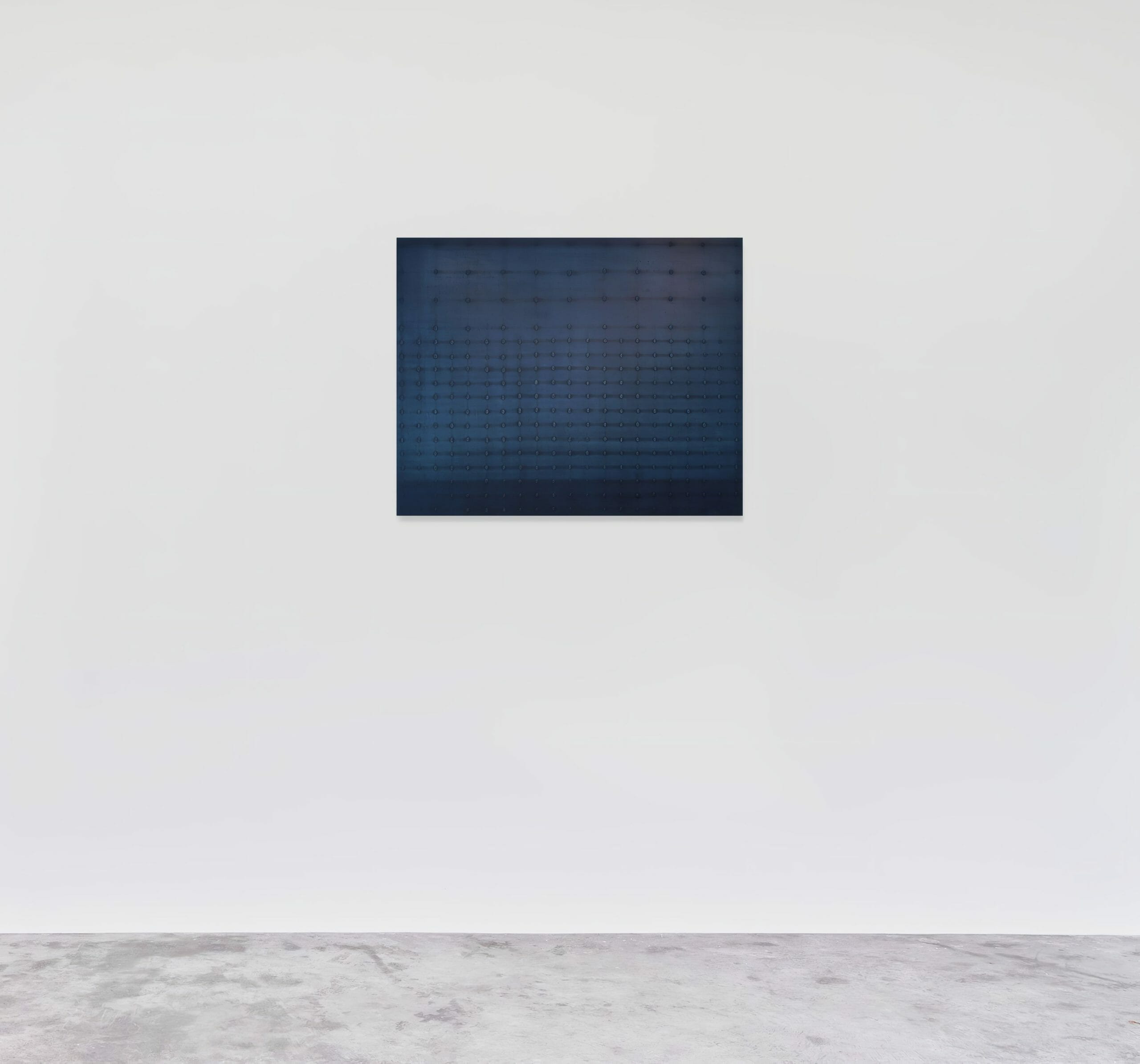
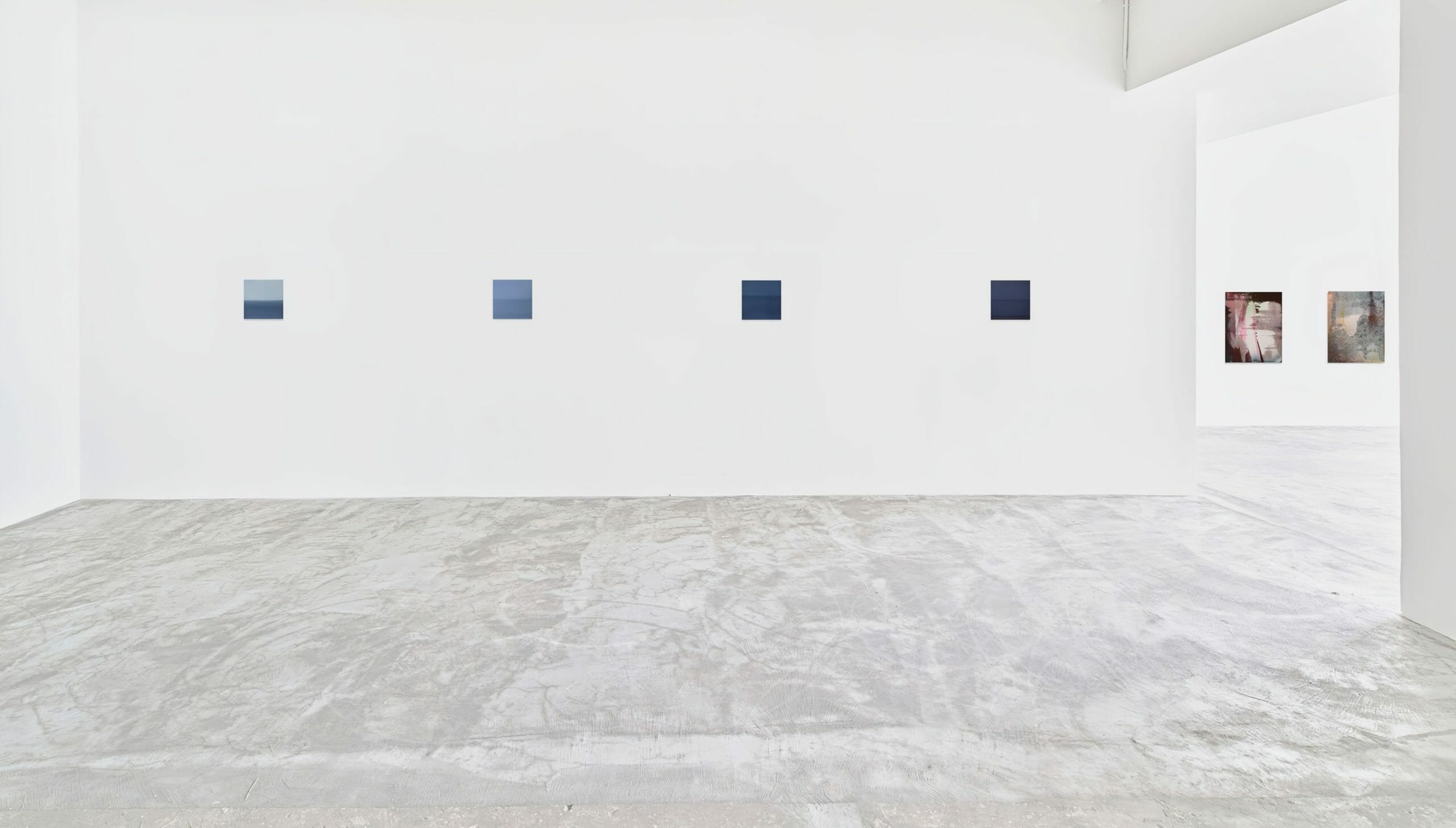
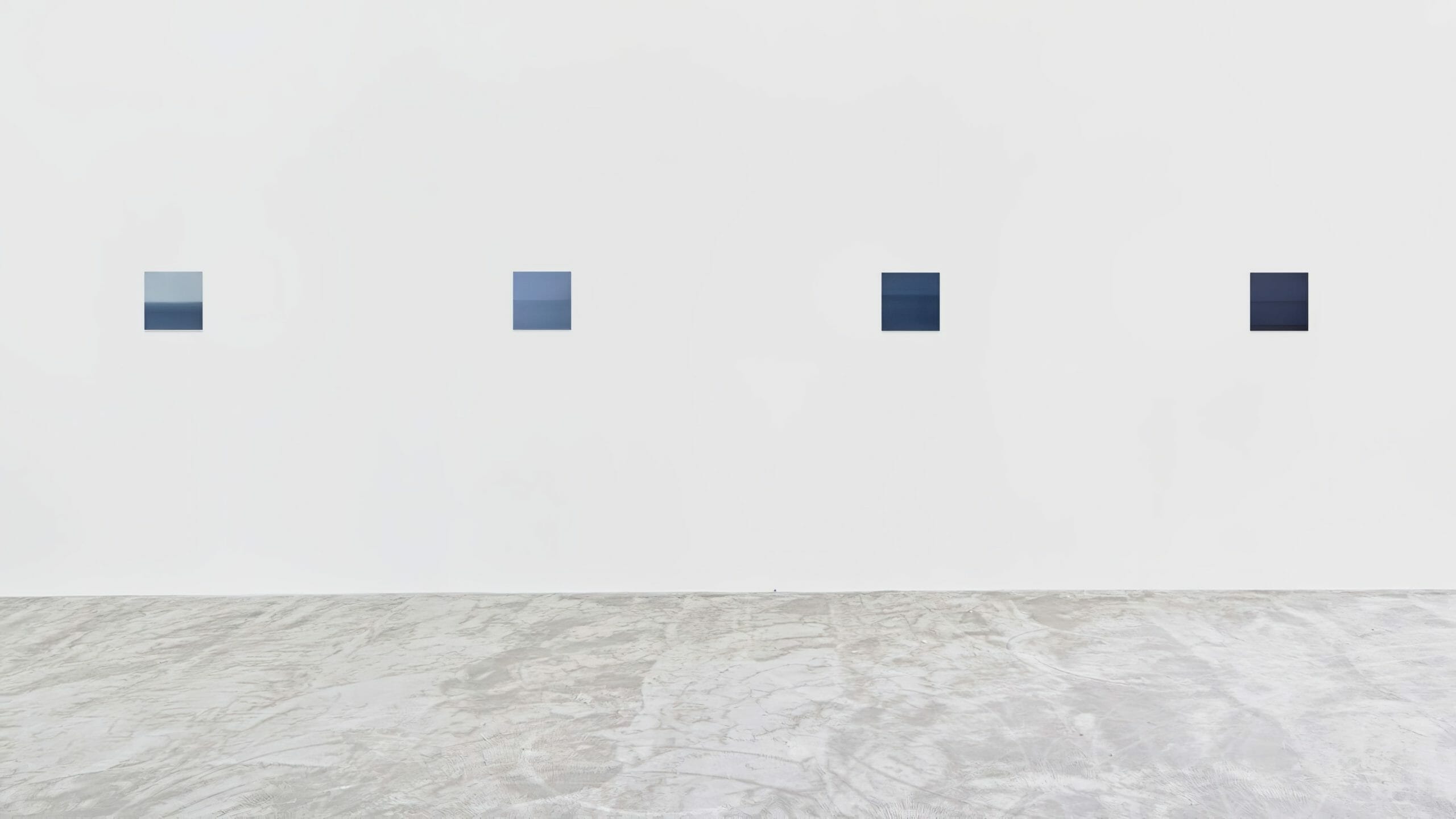
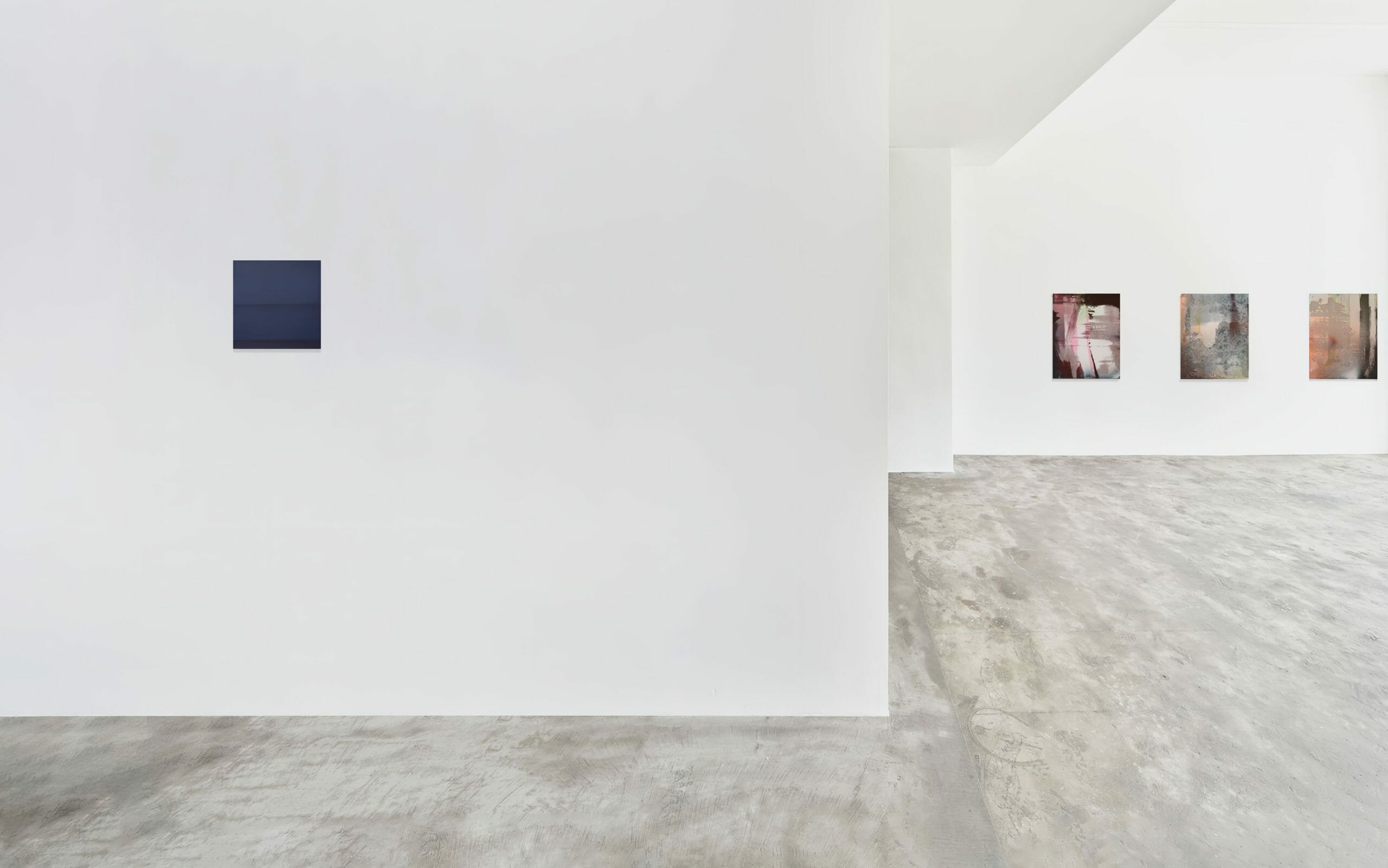
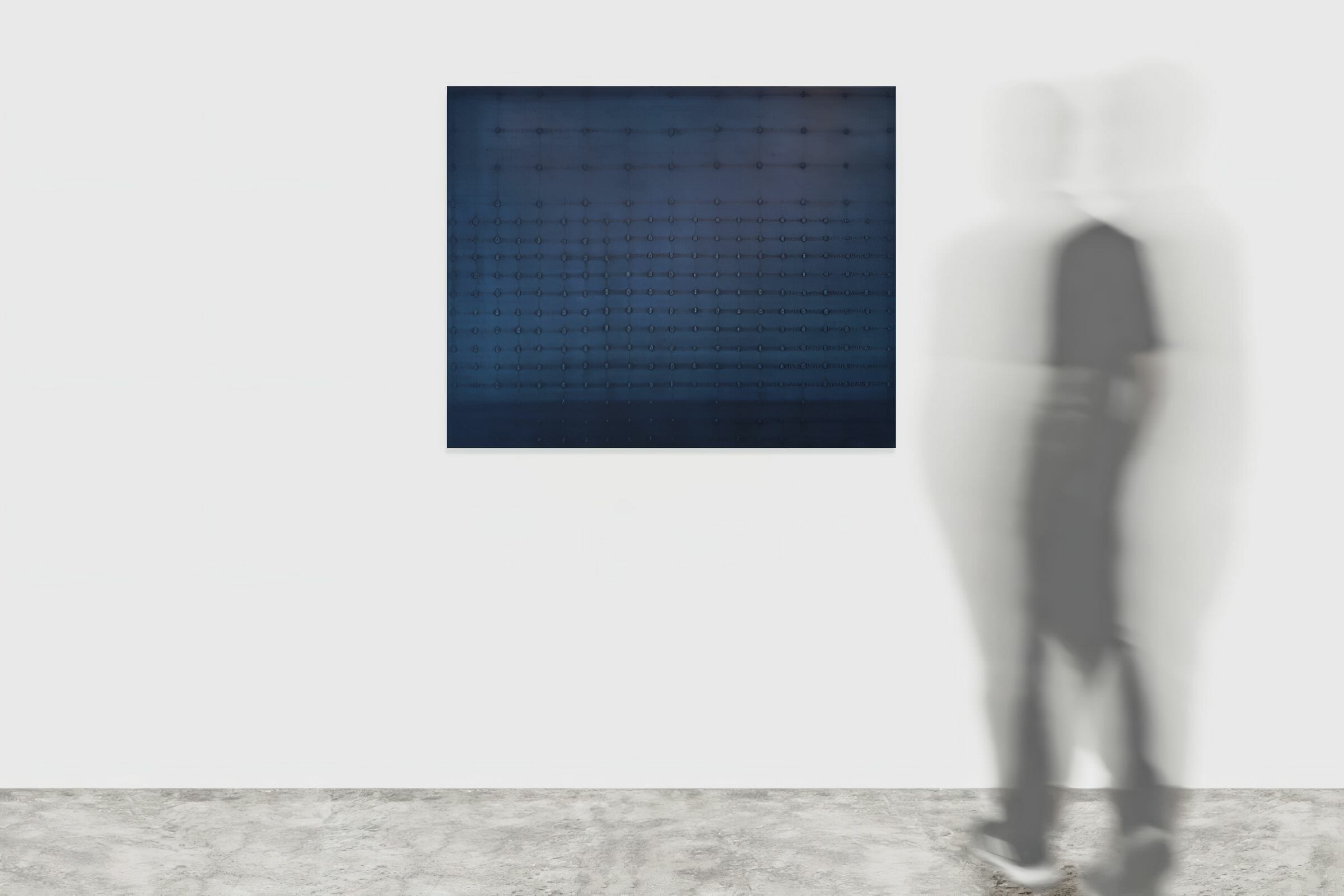
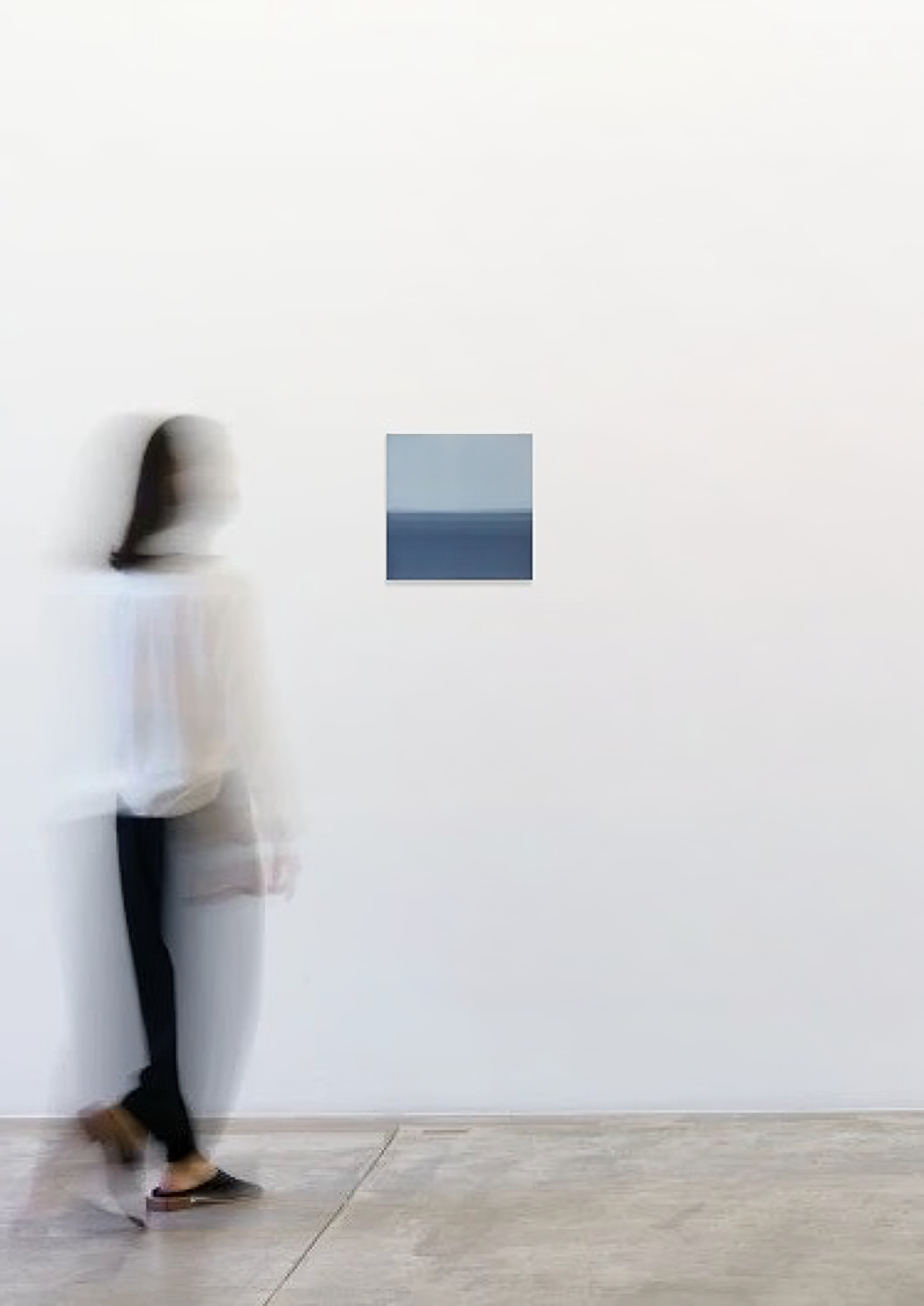
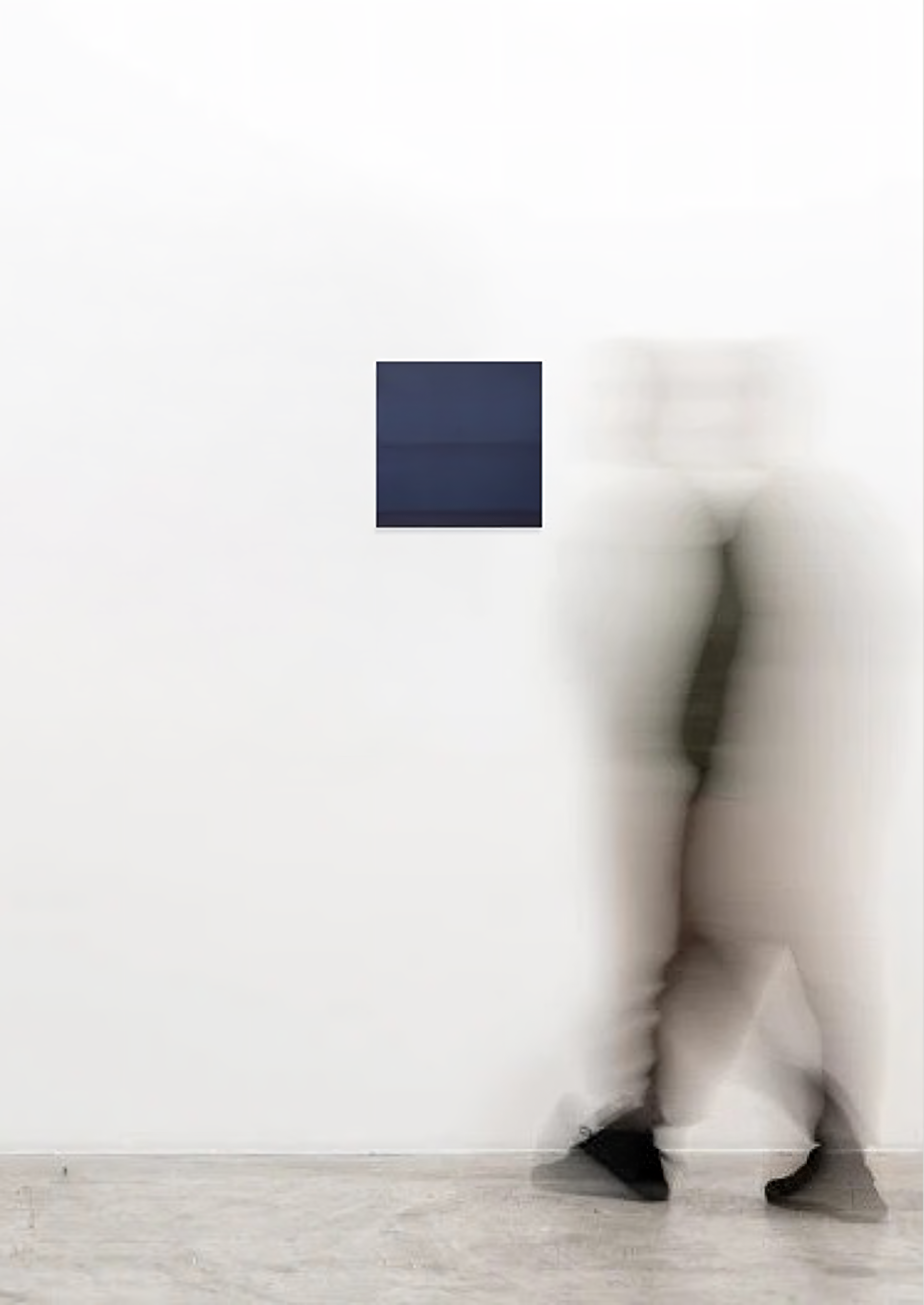
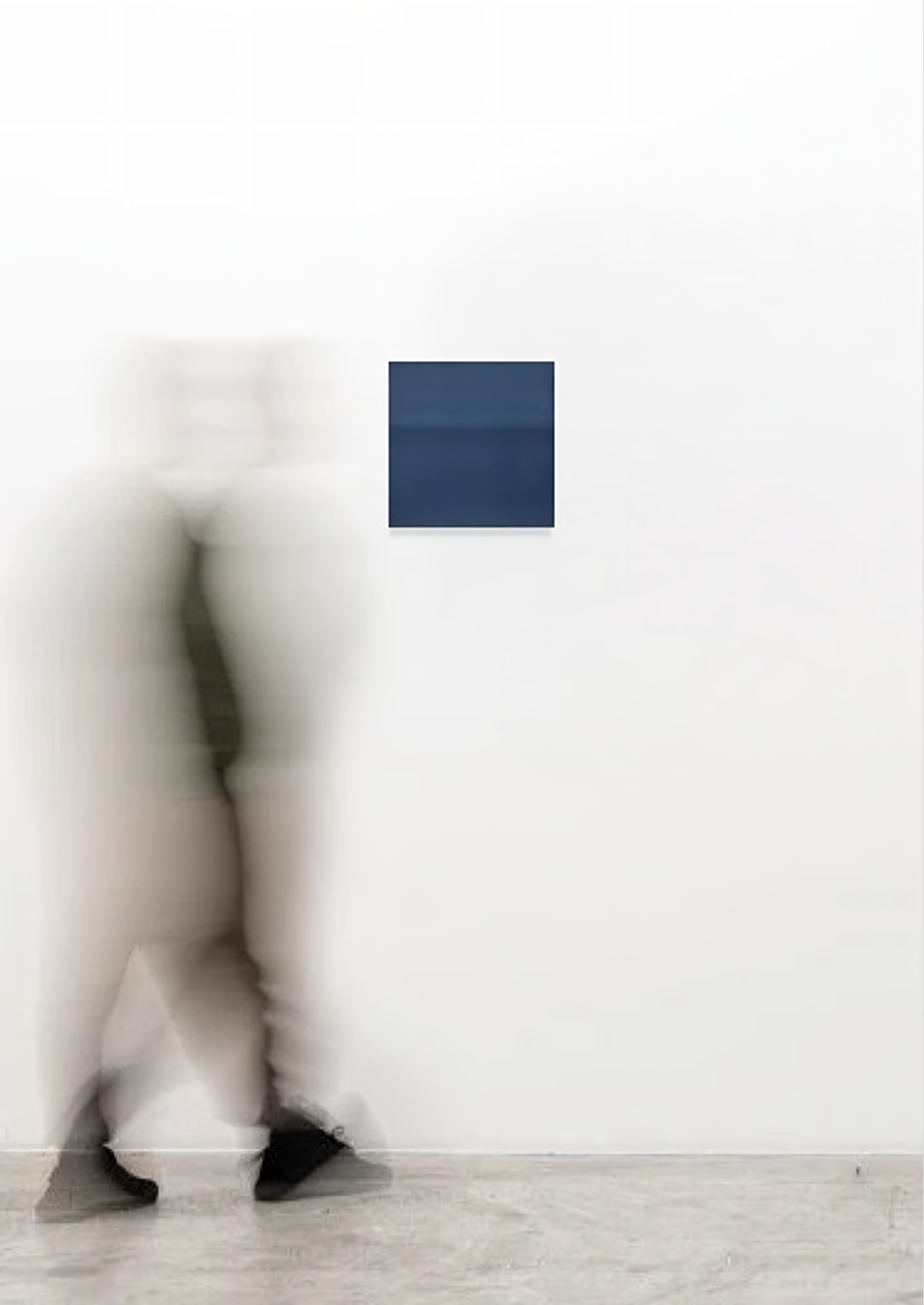
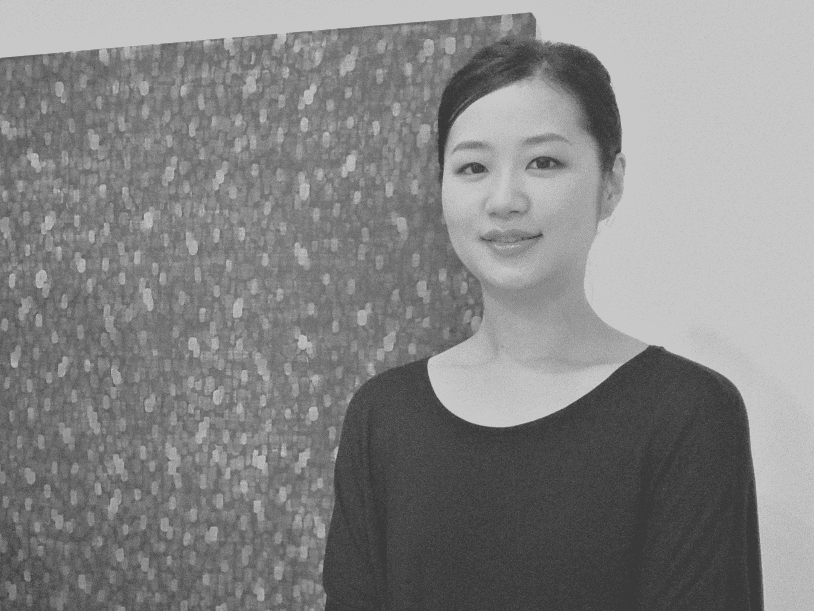
Last but certainly not least, the exhibition showcases five paintings on panel by Maya Makino (born in 1980 in Kanagawa, Japan, based in Tokyo, Japan). Maya Makino aims to capture and preserve the experience of witnessing scenes from the past, resulting from an involuntary awareness of sensations and appearing momentarily before her eyes. Think of the quietness of the night, the sound of the rain, or the scent of a flower. These fragments trigger childhood memories, followed by an experience in which those memories flash rapidly through our minds before they disappear once more, just as the artist becomes aware of these sights and senses. An ongoing quest for memory, feeling, and the spiritual release by evoking these memories and feelings. Arguably, one of the most essential aspects of Makino’s painterly practice is the intensity of color. She uses a single dye to achieve a range of indigo blue hues, working on wooden panels primed with a traditional gesso using gofun—also known as shell lime. By doing so, the Japanese artist can create subtle textures and reliefs on her surface before soaking the panel with an intense indigo dye. The indigo does not sit on top of its surface; it penetrates the support, just as she penetrates the mind in her pursuit of remembering, capturing, and preserving feelings or moments. For Makino, painting is not only a tour de force of a specific medium on a particular surface. She approaches it as a phenomenon emerging from deep within the support, as the color impels the painting to transcend its material aspects. A terrific example is the 2017 painting titled Silent Rain in room two, measuring 80 x 100 centimeters—or 32 x 40 inches. An intense indigo dye creates an atmosphere image, marked by horizontal bands varied in intensity and hue. On top of the surface, we encounter a rhythmic grid of dots—as if knots—creating an actual grid in the gradient of indigo hues, evoking the memory and sensation of a softly rain throughout the night. Across the wide wall, also in room two, four panels measuring 30 x 30 centimeters—or 12 x 12 inches—are rhythmically and evenly spaced. These intense and square-shaped tableaus are marked by Makino’s characteristic horizontal bands, evoking the atmosphere of fog, varied in thickness and darkness—hence the eponymous series of Fog paintings.

enlarge_2-3
previous arrow
next arrow
Exit full screenEnter Full screen

Last Updated on October 15, 2025